Niglihawa is an internationally recognized archaeological site in Kapilavastu District, celebrated for its Mauryan epigraphic heritage. The site contains broken segments of an Asokan pillar recording Emperor Asoka’s pilgrimage and enlargement of the stupa dedicated to Kanakamuni Buddha, one of the revered past Buddhas who preceded Shakyamuni Buddha. It serves as crucial physical evidence of early non-canonical Buddhist pilgrimage networks.
Location and Accessibility
Niglihawa is located northeast of Taulihawa, and sits directly east of the Gorusinghe–Taulihawa Road. If traveling south from Gorusinghe on that road, one reaches the turnoff for Niglihawa/Niglisagar before reaching Taulihawa town. Instructing visitors to head to Taulihawa first and then branch east sends them past the site and adds unnecessary backtrack distance.
Historical Background and Significance
Niglihawa is significant mainly because of its sandstone pillar with an authentic Brahmi inscription. The inscription states that Emperor Asoka enlarged the stupa of Kanakamuni Buddha to twice its original size during his fourteenth regnal year. It also records that he made a personal pilgrimage to worship and erected the stone pillar in his twentieth regnal year, around 249 BCE.
Alois Anton Führer documented the pillar in modern times in 1895. King Ripu Malla of the Khasa-Malla kingdom also left a medieval graffiti inscription on the pillar in 1312 CE. This inscription proves that pilgrims actively used routes through the Nepal Tarai well into the 14th century.
Both the Chinese pilgrims and travelers Faxian and Xuanzang recorded their visits to the stupa and pillar of Kanakamuni Buddha. However, archaeologists have not found the ancient stupa mentioned in the Asokan inscription near the pillar. Consequently, scholars debate whether people moved the pillar segments to the edge of the pond during antiquity or the medieval period from an unexcavated neighboring site like Araurakot, which lies 1.4 kilometers to the east.
Major Attractions of the Site
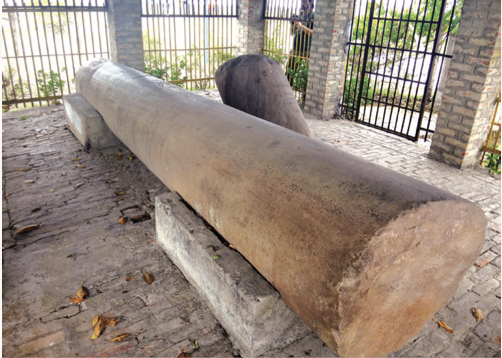
An open pavilion protects two large sandstone segments of an Asokan pillar at the site. The lower section measures roughly 3.2 meters long and bears a five-line edict by Emperor Asoka. The upper piece features an incised peacock design alongside a 1312 CE Devanagari pilgrim inscription from King Ripu Malla. Visitors can also see the historic Niglisagar reservoir next to the pillar. In addition, they can visit a small modern shrine that houses a statue of Kanakamuni Buddha, which the local community built.
निग्लिहवा
परिचय
कपिलवस्तु जिल्लामा अवस्थित निग्लिहवा अन्तर्राष्ट्रिय रूपमा ख्यातिप्राप्त पुरातात्विक स्थल हो, जुन आफ्नो मौर्यकालीन अभिलेखीय सम्पदाका लागि प्रसिद्ध छ। यस स्थलमा सम्राट अशोकको तीर्थयात्रा तथा शाक्यमुनि बुद्धभन्दा पूर्वका पूजनीय अतीत बुद्धहरूमध्येका एक, कनकमुनि बुद्धको स्तुप विस्तार गरिएको विवरण उल्लेख भएका अशोक स्तम्भका खण्डित टुक्राहरू रहेका छन्। यसले प्रारम्भिक गैर-धर्मशास्त्रीय बौद्ध तीर्थाटन सञ्जालको महत्त्वपूर्ण भौतिक प्रमाण प्रस्तुत गर्दछ।
अवस्थिति तथा पहुँच
यो सम्पदास्थल तौलिहवाको उत्तर-पूर्वतर्फ, गोरुसिङ्गे–तौलिहवा सडकको ठीक पूर्वमा अवस्थित छ। गोरुसिङ्गेबाट उक्त सडक हुँदै दक्षिणतर्फ यात्रा गर्दा तौलिहवा बजार नपुग्दै निग्लिहवा/निग्लिसागर जाने मोड आइपुग्छ। यात्रुहरूलाई पहिले तौलिहवा पुगेर अनि मात्र पूर्वतर्फ जान सुझाउँदा उनीहरू यो स्थल पार गरेर अगाडि पुग्ने हुँदा अनावश्यक रूपमा दोहोरो दूरी तय गर्नुपर्ने हुन्छ।
ऐतिहासिक पृष्ठभूमि तथा महत्त्व
निग्लिहवा मुख्यतया प्रामाणिक ब्राह्मी लिपि उत्कीर्ण बलौटे ढुङ्गाको स्तम्भका कारण महत्त्वपूर्ण मानिन्छ। यस अभिलेखमा सम्राट अशोकले आफ्नो राज्यारोहणको १४औँ वर्षमा कनकमुनि बुद्धको स्तुपलाई यसको साविकको आकारभन्दा दोब्बर ठूलो बनाएको उल्लेख छ। साथै, उहाँले करिब इसापूर्व २४९ मा आफ्नो शासनकालको २०औँ वर्षको अवसरमा यहाँ स्वयं तीर्थयात्रा गरी पूजाअर्चना गरेको र यो प्रस्तर स्तम्भ खडा गरेको व्यहोरा पनि यसमा अभिलेखबद्ध छ।
आधुनिक कालमा सन् १८९५ मा एलोइस एन्टोन फुहररले यस स्तम्भको अभिलेखीकरण गरेका थिए। खस-मल्ल राज्यका राजा रिपु मल्लले पनि सन् १३१२ मा यस स्तम्भमा मध्यकालीन अभिलेख कुँदाएका थिए। यो अभिलेखले १४औँ शताब्दीसम्म पनि तीर्थयात्रीहरूले नेपालको तराई हुँदै जाने पदमार्गहरू सक्रिय रूपमा प्रयोग गर्ने गर्दथे भन्ने तथ्य प्रमाणित गर्दछ।
चिनियाँ तीर्थयात्री तथा यात्रीहरू फासियान र ह्वेनसाङ दुवैले कनकमुनि बुद्धको स्तुप तथा स्तम्भको भ्रमण गरेको विवरण उल्लेख गरेका छन्। यद्यपि, अशोकको अभिलेखमा चर्चा गरिएको उक्त प्राचीन स्तुप पुरातत्वविद्हरूले स्तम्भ नजिकै फेला पार्न सकेका छैनन्। परिणामस्वरूप, यो स्तम्भ प्राचीन वा मध्यकालमा पोखरीको डिलमा स्थानान्तरण गरिएको हो कि १.४ किलोमिटर पूर्वमा रहेको अरौराकोट जस्तो कुनै उत्खनन हुन बाँकी नजिकैको स्थलबाट यहाँ सारिएको हो भन्ने विषयमा विद्वानहरूबीच बहस कायमै छ।
यस स्थलका प्रमुख आकर्षणहरू
यस स्थलमा रहेको खुला मण्डपले अशोक स्तम्भका दुईवटा ठूला बलौटे ढुङ्गाका खण्डहरूलाई संरक्षण प्रदान गर्दछ। करिब ३.२ मिटर लामो तल्लो खण्डमा सम्राट अशोकको पाँच पङ्क्तिको राजकीय धर्मलिपिको अभिलेख छ। माथिल्लो खण्डमा कुँदिएको मयूरको आकृतिका साथै राजा रिपु मल्लको सन् १३१२ को देवनागरी तीर्थ-अभिलेख रहेको छ। आगन्तुकहरूले स्तम्भको छेवैमा रहेको ऐतिहासिक निग्लिसागर जलाशय पनि अवलोकन गर्न सक्दछन्। यसका अतिरिक्त, उनीहरूले स्थानीय समुदायद्वारा निर्मित कनकमुनि बुद्धको मूर्ति प्रतिष्ठापित एक सानो आधुनिक मन्दिरको पनि दर्शन गर्न सक्दछन्।



 निग्लिहवा