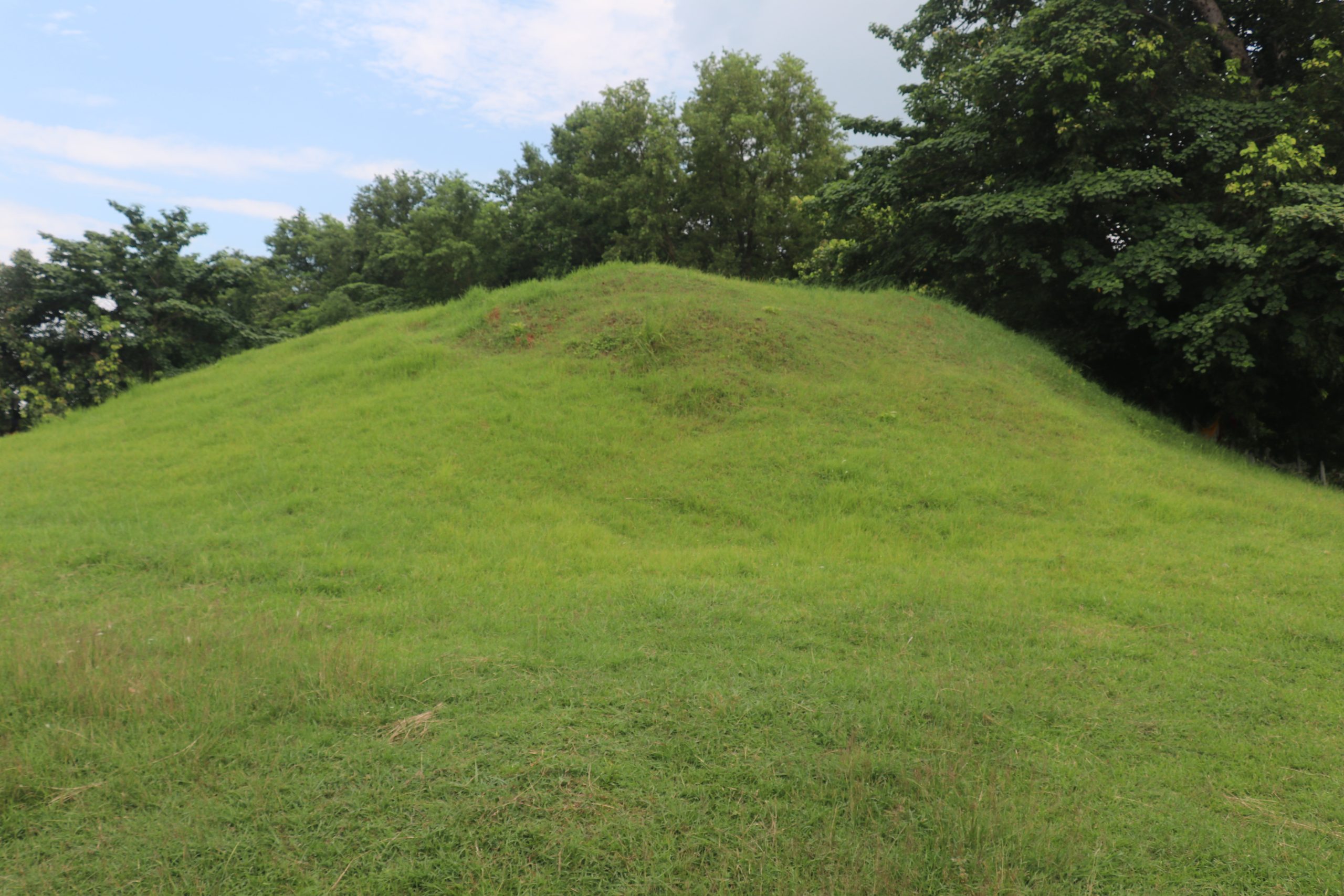
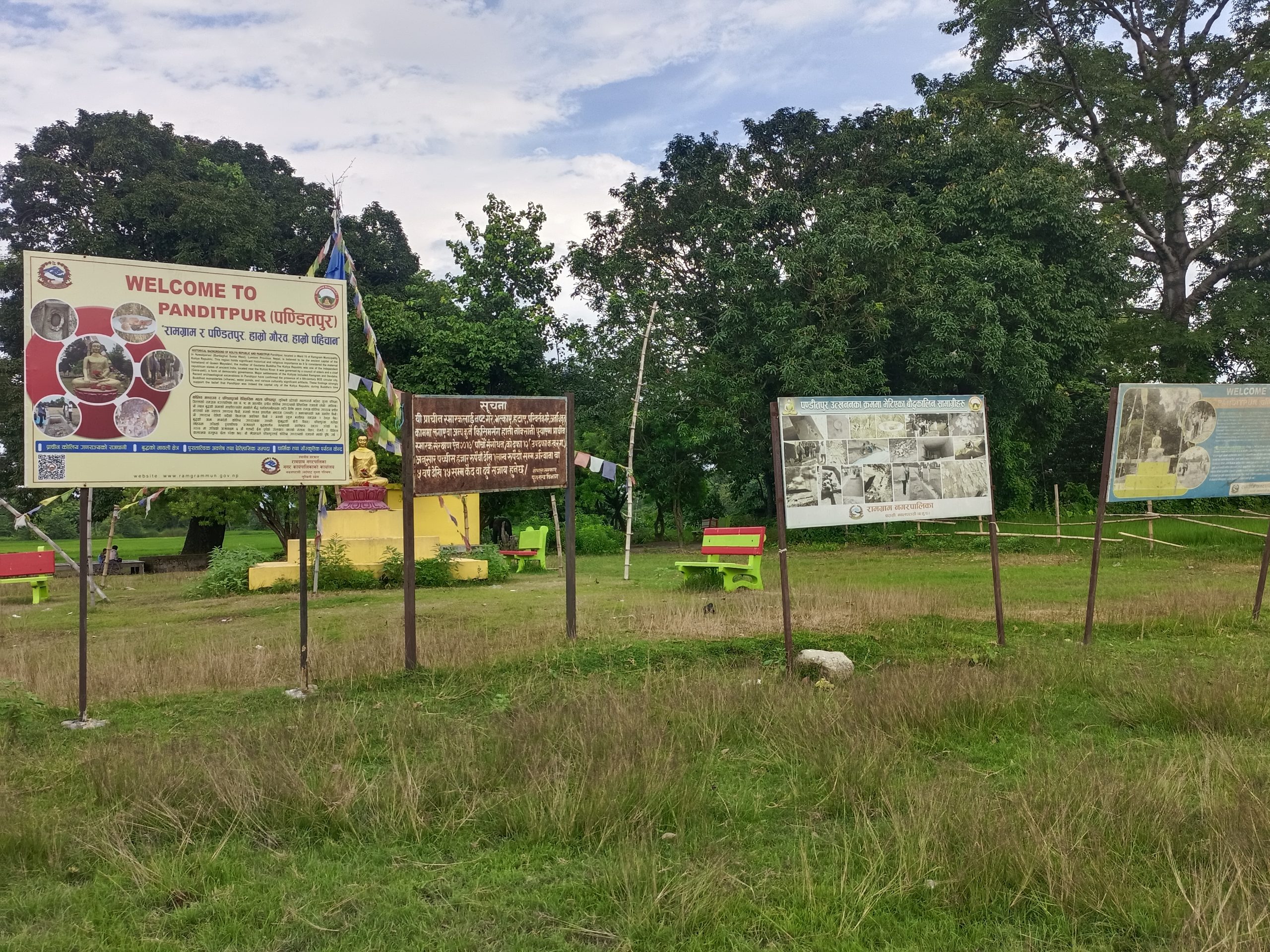
Ramagrama Stupa is an archaeological and pilgrimage monument located in West Nawalparasi District. Renowned as the only undisturbed stupa among the original eight mahastupas that received a share of Shakyamuni Buddha’s corporeal relics (asthi dhatu) after the Mahaparinirvana, it remains an exceptionally sacred monument preserved inside an unexcavated, earthen mound.
Location and Accessibility
Located along the Jharahi River in West Nawalparasi District, the site sits in open fields about 4 km south of Parasi Bazar and roughly 50 km east of the Lumbini Sacred Garden by road.
A visitor using the East-West Highway, drive south for 9 km to Parasi, then continue 4 km further south to reach the stupa. Travelers coming from Bhairahawa or Gautam Buddha International Airport can drive 35 to 40 km east using either the Postal Highway or the Bhairahawa–Bhumahi–Parasi route.
Those arriving from the Belahiya (Sunauli) border can simply travel north to Bhairahawa first, then head east toward Parasi.
Historical Background and Significance
According to the MahaparinibbanaSutta, following the cremation of the Buddha at Kushinagar, his bodily relics were divided into eight equal portions; one portion was given to the Koliyas of Ramagrama, who enshrined them inside a grand stupa.
Buddhist textual tradition records that during the 3rd century BCE, Emperor Asoka opened seven of the original relic stupas to redistribute the relics into 84,000 shrines across his empire. However, when he visited Ramagrama, the guardian serpent-king (Naga) appealed to him to leave the stupa undisturbed, and Asoka withdrew. Both the Chinese pilgrims and travelers Faxian in the 5th century CE and Xuanzang in the 7th century CE respectively documented this narrative, describing a quiet, wild stupa worshiped by wild elephants and Nagas.
Archaeological surveys initiated by the Department of Archaeology in 1997 confirmed that the prominent 10-meter-high mound encases a tiered brick stupa structure exhibiting continuous architectural expansion phases from the 3rd Century BCE Mauryan, later Shunga, then Kushan, through early Gupta periods. Recent non-invasive geophysical surveys have revealed buried monastic walls, residential courtyards, and ancient pathways surrounding the main stupa. In accordance with sacred preservation ethics, archaeologists have deliberately left the core relic chamber unpenetrated.
Major Attractions of the Site
Primary highlight of the site is the 10-meter-high earthen stupa, crowned by entwined banyan and bodhi trees with roots wrapping around its ancient brick core. Visitors can observe the multi-tiered stupa platform exposed in nearby consolidated excavation trenches, walk along the tranquil Jharahi River corridor flanking the monument, and experience the peaceful open-air meditation paths and prayer flags where pilgrims gather for chanting and circumambulation.
परिचय
रामग्राम स्तूप पश्चिम नवलपरासी जिल्लामा अवस्थित एक पुरातात्त्विक तथा तीर्थस्थल स्मारक हो। महापरिनिर्वाणपश्चात् शाक्यमुनि बुद्धको भौतिक अस्थि धातुको एक अंश प्राप्त गर्ने मूल आठ महास्तूपहरूमध्ये हालसम्म अक्षुण्ण एक मात्र स्तूपका रूपमा प्रख्यात, यो उत्खनन नगरिएको माटोको थुम्को भित्र सुरक्षित रहेको एक अद्वितीय पवित्र स्मारक हो।
अवस्थिति तथा पहुँच
पश्चिम नवलपरासी जिल्लाको झरही नदी किनारमा अवस्थित यो स्थल परासी बजारबाट करिब ४ किलोमिटर दक्षिण तथा लुम्बिनी पवित्र उद्यानबाट सडक मार्ग हुँदै करिब ५० किलोमिटर पूर्वमा खुला खेतबारीको बीचमा रहेको छ।
पूर्व-पश्चिम राजमार्ग प्रयोग गर्ने आगन्तुकहरू ९ किलोमिटर दक्षिण परासी आई त्यहाँबाट थप ४ किलोमिटर दक्षिणतर्फ सवारी चलाएर स्तूप पुग्न सक्छन्। भैरहवा वा गौतमबुद्ध अन्तर्राष्ट्रिय विमानस्थलबाट आउने यात्रुहरू हुलाकी राजमार्ग वा भैरहवा–भुमही–परासी मार्ग प्रयोग गरी ३५ देखि ४० किलोमिटर पूर्व यात्रा गर्न सक्छन्। त्यसैगरी बेलहिया (सुनौली) नाकाबाट आउनेहरू पहिले सिधै उत्तर भैरहवा पुगेर त्यहाँबाट पूर्व परासीतर्फ लाग्न सक्छन्।
ऐतिहासिक पृष्ठभूमि तथा महत्त्व
महापरिनिब्बान सुत्तका अनुसार, कुशीनगरमा बुद्धको अन्त्येष्टिपश्चात् उहाँको अस्थि धातुलाई आठ बराबर भागमा विभाजन गरिएको थियो, जसमध्ये एक भाग रामग्रामका कोलियहरूलाई दिइयो, जसले त्यसलाई एक भव्य स्तूपभित्र प्रतिस्थापन गरे।
बौद्ध ग्रन्थहरूको परम्परा अनुसार, इस्वी संवत् पूर्व तेस्रो शताब्दीमा सम्राट अशोकले आफ्नो साम्राज्यभर ८४,००० चैत्यहरूमा धातुहरू पुनःवितरण गर्न मूल आठमध्ये सातवटा धातु-स्तूपहरू उत्खनन गरिसकेका थिए। यद्यपि, जब उनी रामग्राम पुगे, त्यहाँका संरक्षक नागहरूले स्तूपलाई अक्षुण्ण नै छाडिदिन अनुरोध गरेपछि अशोक पछि हटे । ५औँ शताब्दीका फाक्सियान अर्थात फाहियान र ७औँ शताब्दीका सुआनझाङ अर्थात ह्वेनसाङ दुवै चिनियाँ तीर्थयात्री तथा यात्रुहरूले जङ्गली हात्ती र नागहरूद्वारा पूजा गरिने एक शान्त, प्राकृतिक स्तूपको रूपमा वर्णन गर्दै यस विवरणलाई आ-आफ्नो यात्रावृत्तान्तमा अभिलेख गरेका छन्।
पुरातत्त्व विभागद्वारा सन् १९९७ मा सुरु गरिएका पुरातात्त्विक सर्वेक्षणहरूले यो मुख्य १० मिटर अग्लो ढिस्कोले इस्वी संवत् पूर्व तेस्रो शताब्दीको मौर्य, त्यसपछिको शुङ्ग, कुषाण हुँदै प्रारम्भिक गुप्तकालसम्म निरन्तर वास्तुकला विस्तारका चरणहरू देखाउने एक तहगत इँटाको स्तूप संरचनालाई ढाकेको पुष्टि गरे। हालै गरिएका गैर-आक्रामक भूभौतिकीय सर्वेक्षणहरूले मूल स्तूपको वरिपरि दबिएका विहारका पर्खालहरू, आवासीय चोकहरू र प्राचीन मार्गहरू उजागर गरेका छन्। पवित्र संरक्षण मान्यतालाई सम्मान गर्दै, पुरातत्त्वविद्हरूले मूल धातु-गर्भ लाई अहिलेसम्म नखोली सुरक्षित राखेका छन्।
यस स्थलका प्रमुख आकर्षणहरू
यस स्थलको मुख्य आकर्षण १० मिटर अग्लो माटोको स्तूप हो, जसको शिरमा प्राचीन इँटाको संरचनालाई जराले बेरेका आपसमा जेलिएका वर र पिपलका रूखहरू रहेका छन्। आगन्तुकहरूले नजिकैका उत्खनन खन्तीहरूमा संरक्षित अवस्थामा रहेका बहु-तहगत स्तूपका पेटीहरू अवलोकन गर्न सक्छन्, स्मारकको छेउमै बग्ने शान्त झरही नदीको किनारमा टहल्न सक्छन्, तथा तीर्थयात्रीहरू जप, ध्यान र परिक्रमाका लागि भेला हुने खुला ध्यान मार्ग एवं प्रार्थनाका ध्वजाहरूले सुशोभित शान्त वातावरणको अनुभव गर्न सक्छन्।