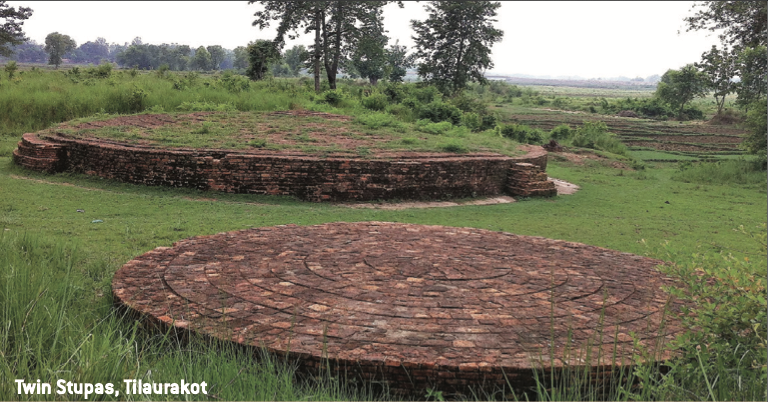
Dhamnihawa is a prominent Buddhist archaeological site located in the Kapilavastu district of southern Nepal. Renowned for its twin brick stupas, the site represents an essential component of the greater Kapilavastu cultural landscape. Identified by most historians and local traditions as memorial monuments erected to honor King Suddhodana and Queen Mayadevi, Prince Siddhartha’s parents, Dhamnihawa preserves the filial and spiritual heritage tied directly to the Buddha’s early life and family lineage.
Location and Accessibility
Dhamnihawa is located in the Kapilavastu District of Lumbini Province, lying just north of the ancient fortified citadel of Tilaurakot in the outer suburbs of ancient Kapilavastu. Visitors can easily reach the area through the nearby hub of Taulihawa, which is situated about 29 km west of Lumbini and connected to major towns like Bhairahawa and Butwal by regional roads. From Taulihawa or the main Tilaurakot complex, travelers and pilgrims can arrive at Dhamnihawa in just a few minutes using local e-rickshaws, bicycles, or private taxis.
Historical Background and Significances
First uncovered in the late 1960s, Dhamnihawa saw renewed research between 2014 and 2016 through non-invasive geophysical investigations and magnetometer surveys. The most common tradition identifies the two stupas as memorial monuments dedicated to Buddha’s parents, King Suddhodana and Queen Mayadevi.
Alternatively, some scholars suggest they may be the surviving remnants of four stupas built to commemorate the Four Sights witnessed by Prince Siddhartha before his Great Renunciation. Archaeologically, the larger stupa was started after the 4th century BC and expanded across four stages, while the smaller adjacent stupa was built later in a single phase. Magnetic surveys also revealed dipolar anomalies pointing to buried ceramics or vessels inside, prompting researchers to preserve the stupas intact rather than disturb them with excavations.
Major Attractions of the Site
The primary attraction of the site is the large circular stupa, often associated with King Suddhodana, which measures roughly 52 feet in diameter and reflects four distinct stages of brick construction. Right beside it stands the smaller Mayadevi stupa, measuring about 26 feet across and built in a single phase. Together with the surrounding ancient structural remnants and earth layers, these twin monuments offer a vivid glimpse into the suburban perimeter, pilgrimage routes, and sacred landscape just outside the fortified capital of Tilaurakot.
धमनिहवा स्तुपहरू
परिचय
धमनिहवा दक्षिणी नेपालको कपिलवस्तु जिल्लामा अवस्थित एक प्रमुख बौद्ध पुरातात्त्विक स्थल हो। आफ्ना जुम्ल्याहा इँटाका स्तुपहरूका लागि प्रख्यात यो स्थल बृहत्तर कपिलवस्तु सांस्कृतिक परिदृश्यको एक महत्त्वपूर्ण अङ्ग मानिन्छ। अधिकांश इतिहासकारहरू तथा स्थानीय परम्पराद्वारा राजकुमार सिद्धार्थका मातापिता, राजा शुद्धोदन र महारानी मायादेवीको सम्मानमा निर्मित स्मृति स्मारकका रूपमा पहिचान गरिएको यस धमनिहवाले बुद्धको प्रारम्भिक जीवन र पारिवारिक वंशसँग प्रत्यक्ष जोडिएको पितृभक्ति तथा आध्यात्मिक सम्पदालाई जीवन्त राखेको छ।
अवस्थिति तथा पहुँच
लुम्बिनी प्रदेशको कपिलवस्तु जिल्लामा अवस्थित धमनिहवा प्राचीन कपिलवस्तुको बाहिरी उपनगरीय क्षेत्र अर्थात् प्राचीन सुदृढ किल्ला तिलौराकोटको ठीक उत्तरतर्फ पर्दछ। आगन्तुकहरू नजिकैको केन्द्र तौलिहवा हुँदै यहाँ सजिलै पुग्न सक्छन्; जुन लुम्बिनीबाट करिब २९ किलोमिटर पश्चिममा रहेको छ र क्षेत्रीय सडक सञ्जालमार्फत भैरहवा तथा बुटवलजस्ता प्रमुख सहरहरूसँग जोडिएको छ। तौलिहवा वा मुख्य तिलौराकोट परिसरबाट यात्रु तथा तीर्थयात्रीहरू स्थानीय ई-रिक्सा, साइकल वा निजी ट्याक्सी प्रयोग गरी केही मिनेटमै धमनिहवा पुग्न सक्दछन्।
ऐतिहासिक पृष्ठभूमि तथा महत्त्व
सन् १९६० को दशकको उत्तरार्धमा पहिलोपटक उत्खनन गरिएको धमनिहवामा सन् २०१४ देखि २०१६ को बीचमा गैर-आक्रामक भू-भौतिकीय अनुसन्धान तथा म्याग्नेटोमिटर सर्वेक्षणमार्फत पुनः नयाँ खोज तथा अध्ययन अघि बढाइएको थियो। यहाँका दुई स्तुपहरूलाई बुद्धका आमाबुबा राजा शुद्धोदन र रानी मायादेवीप्रति समर्पित स्मृति स्मारकका रूपमा लिने धारणा सबैभन्दा बढी प्रचलित छ।
अर्कोतर्फ, केही विद्वान्हरूका अनुसार यी दुई संरचनाहरू राजकुमार सिद्धार्थले गृहत्याग पूर्व देखेका चार दृश्यहरू अर्थात चार निमित्तको स्मृतिमा बनाइएका चारवटा स्तुपहरूमध्ये बाँकी रहेका अवशेष हुन सक्ने अनुमान पनि गरिएको छ। पुरातात्त्विक दृष्टिकोणले हेर्दा, ठूलो स्तुपको निर्माण इशापूर्व चौथो शताब्दी पछि सुरु भएको र यो चार फरक-फरक चरणहरूमा विस्तारित भएको पाइन्छ भने यसैसँग जोडिएको सानो स्तुप पछि एकै चरणमा निर्माण गरिएको थियो। चुम्बकीय सर्वेक्षणहरूले स्तुपभित्र माटोका भाँडाकुँडा वा धातुका पात्रहरू पुरिएका संकेत गर्ने द्विध्रुवीय विसङ्गतिहरू देखाएका थिए, जसका कारण अनुसन्धानकर्ताहरूले स्तुपलाई उत्खनन गरी खल्बल्याउनु भन्दा यसको मौलिक स्वरूपलाई यथावत् अक्षुण्ण राख्ने निर्णय गरे।
स्थलका प्रमुख आकर्षणहरू
यस स्थलको मुख्य आकर्षण ठूलो गोलाकार स्तुप हो जसलाई प्रायः राजा शुद्धोदनसँग सम्बन्धित मानिन्छ । यसको व्यास करिब ५२ फिट रहेको छ र यसले इँटा निर्माणका चार स्पष्ट चरणहरूलाई प्रतिविम्बित गर्दछ। यसको ठीक छेउमा करिब २६ फिट व्यास भएको सानो मायादेवी स्तुप रहेको छ, जुन एकै चरणमा निर्माण गरिएको हो। वरपरका प्राचीन संरचनात्मक अवशेषहरू र माटोका पत्रहरूसँगै, यी जुम्ल्याहा स्मारकहरूले सुदृढ प्राचीन राजधानी तिलौराकोट बाहिरको उपनगरीय परिधि, तीर्थयात्राका मार्गहरू तथा पवित्र परिदृश्यको जीवन्त झलक प्रस्तुत गर्दछन्।