For years, a being ruled over Bardiya’s vast plains and dense forests, one whose every footstep sent a pulse through the earth, and whose mere serene presence lent the forest an air of otherworldly majesty. This was “Raja Gaj,” whose name in Nepali means “King of Elephants.” Having established his domain in Nepal’s Bardiya National Park, this massive Asian bull elephant was considered one of the largest and most famous elephants of modern times. He was not merely a wild animal, but a living piece of history in Bardiya’s forests, an incomparable heritage bestowed by nature.
Raja Gaj’s build and size were as vast and astonishing as something out of a legend. His shoulder height was measured at roughly 3.43 meters (11 feet 3 inches), reaching up to 3.7 meters about 2 feet (0.6 to 1 meter) taller than a typical Asian elephant. Carrying an estimated weight of some 7 to 8 tons, when he walked through the forest, it seemed as though nature herself was in motion. His massive footprints, 56 to 58 centimeters in diameter, quietly conveyed his power and grandeur.
An ancient mystery lay hidden in his outward form. Two large dome-like protrusions rising on his head, along with the distinctive bone structure above his nose, made him resemble extinct prehistoric elephants. As he aged, the hair on his body, the long eyelashes, and the tuft of hair at the tip of his tail had nearly all fallen away, giving him the appearance of an ancient ascetic of the forest. His tusks were long and thick, visible to a length of 1 to 1.3 meters. When his right tusk broke in the middle in 1995, forest lovers were saddened but nature restored his form once again; that tusk grew back at a rate of about 15 centimeters a year until it regained its former size.
Raja Gaj first appeared in Bardiya’s history around 1985 AD, where he often roamed the forest in deep companionship with another massive elephant named “Kanchha.” Their close bond was a beautiful sight within Bardiya’s forest. Raja Gaj’s extraordinary form and way of life drew attention from around the world. In 1992 and 1995 AD, a team led by British explorer Colonel John Blashford-Snell and paleontologist Adrian Lister carried out detailed studies of him. Because of his immense size and the unusual structure of his head, some compared him to the extinct mammoth or stegodon but later DNA testing and scientific study confirmed he was not a prehistoric species at all, but simply an ordinary, though extraordinarily large, Asian elephant of our own earth.
As every beautiful journey must come to an end, from December 2007 this beloved king of Bardiya suddenly vanished from the forest. At the time of his disappearance, his age was estimated at around 70 years. A photograph taken by then-Bardiya warden Ramesh Thapa west of the Gholti River in Falgun of 2063 BS became the last recorded memory of Raja Gaj on this earth. A 2010 investigation concluded that he was no longer of this world. Although the exact cause of his death and his remains were never found, only emotional speculations remained that he may have died of old age and been swept away by a Karnali River flood, or that in his final moments he may have crossed the border into India. Even in death, he surrendered his body to no one, but quietly dissolved into nature itself.
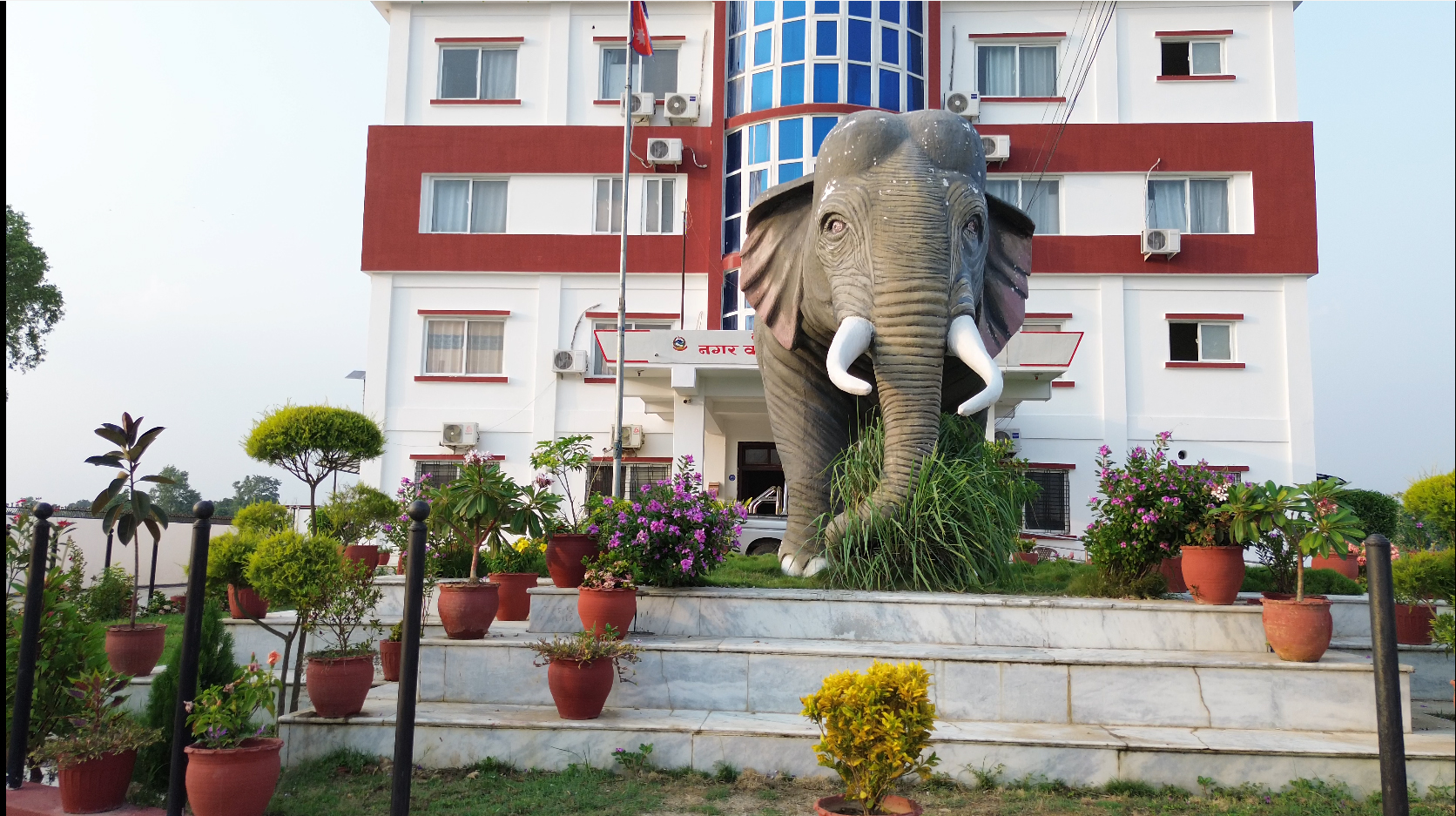
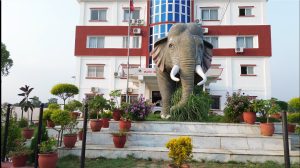
Though Raja Gaj is no longer physically among us today, his memory will always remain fresh in the air of Bardiya and in the hearts of its people. Having become a major tourist attraction of Bardiya National Park and a symbol of Nepal’s wildlife conservation, the local government with the aim of keeping his memory and legacy immortal has had Thakurbaba Municipality build a statue of Raja Gaj. This statue is not merely a sculpture of an elephant, it is a symbol of Bardiya’s wildlife, of nature conservation, and of our glorious history. Let us remember Raja Gaj, and let us protect the nature of Bardiya.
Reference: Tilak Ram Lamsal; Thakurbaba Municipality Chairperson
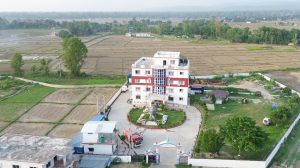
ठाकुरबाबा नगरपालिका नगरकार्यपालिकाको परिसरमा रहेको “’राजा गज” हात्ती
बर्दियाको विशाल फाँट र घना जङ्गलमा वर्षौँसम्म एउटा यस्तो जीवले शासन गर्यो, जसको हरेक पाइलाले धर्तीमा स्पन्दन पैदा गर्थ्यो र जसको शालिन उपस्थिति मात्रले पनि वनमा एक अलौकिक गौरवको आभास दिन्थ्यो । उनी थिए- ‘राजा गज’, जसको नेपाली अर्थ “हात्तीहरूको राजा” हुन्छ । नेपालको बर्दिया राष्ट्रिय निकुञ्जमा आफ्नो साम्राज्य खडा गरेका यी विशाल एसियाली भाले हात्तीलाई आधुनिक समयकै सबैभन्दा ठूला र प्रख्यात हात्तीहरूमध्ये एक मानिन्छ। उनी केवल एउटा वन्यजन्तु मात्र थिएनन्, बरु बर्दियाको जङ्गलका जीवित इतिहास र प्रकृतिले सुम्पिएको अनुपम धरोहर थिए ।
राजा गजको शरीरको बनोट र आकार कुनै एकादेशको कथा जस्तै विशाल र अद्भूत थियो। उनको काँधको उचाइ करिब ३.४३ मिटर (११ फिट ३ इन्च) देखि ३.७ मिटरसम्म मापन गरिएको थियो, जुन सामान्य एसियाली हात्तीभन्दा करिब २ फिट (०.६ देखि १ मिटर) अग्लो हो। करिब ७ देखि ८ टनसम्मको अनुमानित तौल बोकेर जब उनी जङ्गलमा हिँड्थे, तब लाग्थ्यो प्रकृति स्वयं नै चलायमान भइरहेकी छिन्। जमिनमा परेका उनका ५६ देखि ५८ सेन्टिमिटर व्यासका विशाल पाइलाहरूले उनको शक्ति र गरिमालाई शान्त रूपमा प्रस्तुत गर्थे।
उनको बाहिरी आवरणमा एउटा प्राचीन रहस्य लुकेको थियो। टाउकोमा उठेका दुईवटा ठूला गुम्बजजस्ता भागहरू र नाकको माथिल्लो भागको हड्डीको विशिष्ट बनोटले गर्दा उनी लोप भइसकेका प्रागैतिहासिक हात्ती जस्तै देखिन्थे। बढ्दो उमेरसँगै उनको शरीरका रौं, आँखाका लामा परेला र पुच्छरको टुप्पोका रौंहरू लगभग झरिसकेका थिए, जसले उनलाई वनको एक प्राचीन तपस्वी जस्तै देखाउँथ्यो। उनका दाह्राहरू लामा र बाक्ला थिए, जसको बाहिर देखिने लम्बाइ १ देखि १.३ मिटरसम्म थियो। सन् १९९५ मा उनको दाहिने दाह्रा बीचबाट भाँचिदा वनप्रेमीहरू दुःखी भएका थिए तर प्रकृतिले उनलाई फेरि उही रूप फर्काइदिई; त्यो दाह्रा वार्षिक करिब १५ सेन्टिमिटरको दरले बढेर पुनः पुरानै आकारमा फर्किएको थियो।
बर्दियाको इतिहासमा राजा गज पहिलो पटक सन् १९८५ तिर देखा परेका थिए, जहाँ उनी प्रायः ‘कान्छा’ नामको अर्को विशाल हात्तीसँगै निकै गहिरो मित्रताका साथ जङ्गल चहार्ने गर्थे। उनीहरूको त्यो आत्मीय दौंतरी सम्बन्ध बर्दियाको जङ्गलका लागि एउटा सुन्दर दृश्य थियो। राजा गजको यो अद्वितीय शरीर र जीवनशैलीले विश्वकै ध्यान तान्यो। सन् १९९२ र १९९५ मा बेलायती अन्वेषक कर्णेल जोन ब्लासफोर्ड-स्नेल र जीवावशेषविज्ञानी एड्रियन लिस्टरको टोलीले उनको विस्तृत अध्ययन गरे। उनको विशाल आकार र टाउकोको अनौठो बनोटका कारण कतिपयले उनलाई लोप भइसकेको म्यामथ वा स्टेगोडोनसँग तुलना गरे पनि पछि गरिएको डीएनए परीक्षण र वैज्ञानिक अध्ययनले उनी कुनै प्रागैतिहासिक प्रजाति नभई हाम्रै धरतीका एक सामान्य तर असाधारण रूपमा ठूलो एसियाली हात्ती मात्र भएको पुष्टि गर्यो।
हरेक सुन्दर यात्राको एउटा अन्त्य हुन्छ भनेझैँ, सन् २००७ को डिसेम्बर महिनादेखि बर्दियाको यो प्यारो राजा अचानक जङ्गलबाट बेपत्ता भयो। बेपत्ता हुँदा उनको उमेर करिब ७० वर्ष अनुमान गरिएको थियो। बर्दियाका तत्कालीन वार्डेन रमेश थापाले वि.सं. २०६३ फागुनमा घोल्टी नदीको पश्चिममा खिचेको तस्बिर नै राजा गजको यो धर्तीमा अन्तिम स्मृति बन्यो। सन् २०१० मा गरिएको एक अन्वेषणले उनी अब यो संसारमा नरहेको निष्कर्ष निकाल्यो। उनको मृ’त्युको यकिन कारण र अवशेष फेला नपरे पनि वृद्धावस्थाका कारण म’रेको र कर्णाली नदीको बाढीले बगाएको हुन सक्ने वा उनी आफ्नो अन्तिम क्षणमा सीमा पार गरी भारततर्फ गएको हुन सक्ने विभिन्न भावनात्मक अनुमानहरू मात्र बाँकी रहे। उनी म’रेर पनि आफ्नो शरीर कसैलाई सुम्पेनन्, बरु चुपचाप प्रकृतिमै विलीन भए।
राजा गज आज भौतिक रूपमा हामीबीच नभए पनि बर्दियाको हावा र मानिसहरूको हृदयमा उनको सम्झना सधैँ ताजा रहनेछ। बर्दिया राष्ट्रिय निकुञ्जको प्रमुख पर्यटकीय आकर्षण र नेपालको वन्यजन्तु संरक्षणको प्रतीक बनेका उनको सम्झनालाई अमर बनाउन स्थानीय सरकार उनको सम्झना र विरासतलाई अमर राख्ने उद्देश्यले ठाकुरबाबा नगरपालिकाले राजा गजको प्रतिमा निर्माण गरेको छ। यो प्रतिमा एउटा हात्तीको मूर्ति मात्र होइनयो बर्दियाको वन्यजन्तु, प्रकृति संरक्षण र हाम्रो गौरवशाली इतिहासको प्रतीक हो। राजा गजलाई सम्झौँ, बर्दियाको प्रकृति जोगाऔँ।
सन्धर्भ
तिलक राम लम्साल : ठाकुरबाबा नगरपालिका प्रमुख