Monastic community:
The Zangchub Choeling Monastery is home to about 30 monks. Typically, boys as young as ten are brought to the monastery by their parents who want them to become monks. The child’s own desire to become a monk is also required. The monks here are of various origins, although mainly Tibetan and Nepalese. They live and study within the monastery compound under the guidance of the head abbot, Venerable Shangpa Rinpoche.
A day for a monk usually begins with morning prayers at 6:30 a.m., during which they chant two prayers: Manjushri (the deity for wisdom) and Haroya Tara (the deity for removing obstacles). Classes begin at 8 a.m. and end at 3:30 p.m., with time also set aside for self-study. Evening prayers begin at 1 p.m., and the Mahakul Prayer (to the guardians for the Buddha’s teachings) is recited accompanied by traditional Tibetan instruments.
History of Origin:
In 1963, His Holiness, the 16th Gyalwa Karmapa, asked Lama Dupseng Rinpoche to leave Kathmandu to serve the spiritual needs of the Tibetan and Nepalese population in the area. Initially, a small monastery was established for Buddhist services and ceremonies. Over time, as the number of devotees increased, parents began to ask Lama Dupseng Rinpoche to ordain their sons as monks. In a short time, the number of monks in the monastery reached 35.
In 1967, His Holiness, the Dalai Lama, renamed the monastery “Zangchub Choeling” and officially recognized the monastic community under the guidance of Lama Dupseng Rinpoche. Three years later, Rinpoche moved the monastery to its current location, as there was a need for expansion. He planned to build a larger building and improve the facilities. Sadly, in 1976, he passed away without a leader at the newly inaugurated monastery, leaving an uncertain future.
Vikram Shila Buddhist Institute:
The purpose of this educational facility is to provide monks with the opportunity to expand their knowledge of Buddhism in a formal academic environment. After completing nine years of full-time study, monks will be qualified to teach at other institutes. The curriculum focuses on five major texts: Buddhist logic (pramana), the Middle Way (madhyamika); ethical ethics (vinaya); wisdom/supreme knowledge (prajna paramita), and (loosely translated) Buddhist science (abhi dharma).
The monks also attend English, Nepali, and Tibetan grammar classes, and recently, a computer class has been established for older monks. Formal education at the institute only began in 1996, with the monks relying on donations from disciples and devotees to cover the costs of food, teacher salaries, and the general upkeep of the institute.
Jangchub Choeling Shrine Hall:
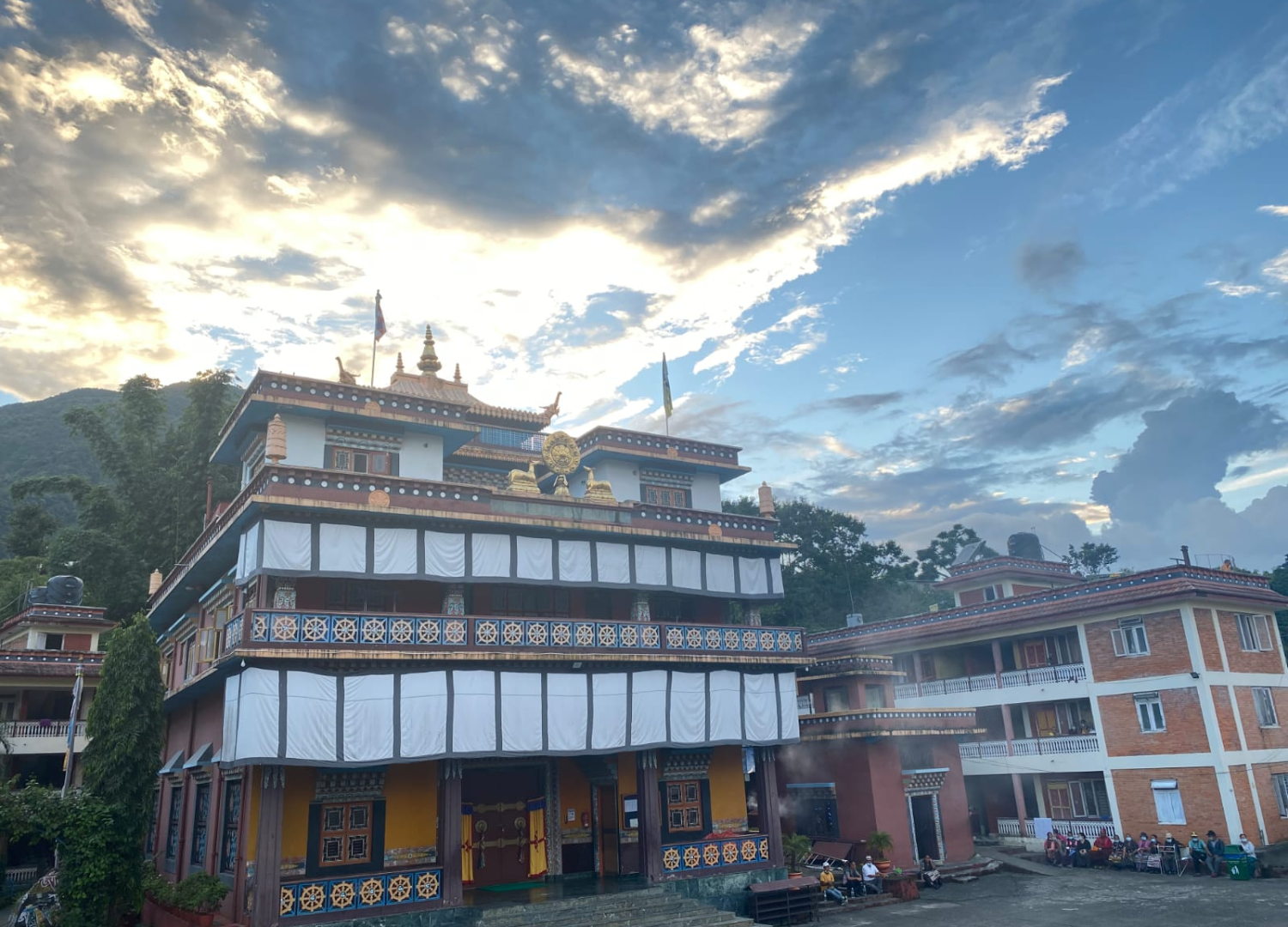
The architecture of the temple hall follows traditional Tibetan design. However, it is constructed entirely with modern building materials.
Inside the main hall is a 7-foot-tall copper and gold-plated statue of Buddha. On either side of this statue, there are 1,000 other smaller Buddha statues, representing the 1,000 Buddhas believed to have existed in this “auspicious age”. The murals, created by Tibetan painter Sri Dhava, depict the life of the Buddha from his birth to Nirvana (the Great Enlightenment). On either side of the entrance are paintings of the Six Jewels (six great Buddhist masters) and the Two Supremes (two chief disciples of the Buddha) who embellished the Buddha’s teachings and made them accessible to all through their commentaries.
A grand Mahakal Puja is performed at the Jangchub Choeling Monastery in Hemja, Tasi Palkhel Tibetan Refugee Camp in Pokhara (performed on Losar, the Tibetan New Year).
Tibetan Year End Puja:
The Mahakal Puja held at the end of the year is considered the biggest annual event in Tibetan monasteries. The worship is held for seven days after elaborate preparations. On the last day of the puja, a day-long Mahakal Vajra Dance is arranged in the established monastery. However, on 13 February 2002, the Vajra Dance performance was still going on. Around seventy monks would be involved in it as dancers or musicians.
Vajra Dance and its Significance:
According to legend, the wrathful expression of the Buddha and Bodhisattva subdued Mataram Rudra with nine cruel dances. Since then, the Vajra Dance was performed only by highly qualified tantric practitioners in India. However, this sacred dance was brought to Tibet in the 8th century after Guru Padmasambhava blessed the place for the construction of the Samye Temple. The Vajra Dance, called ‘Chama’ in Tibetan, requires an extraordinary level of concentration on the part of the dancer. The dance is neither spontaneous nor improvised. It involves complex steps and sequences that are meticulously codified by tradition. Their movements depict the meditations practiced by monks during worship.
Benefits:
Performing the Mahakal Vajra Dance is believed to increase good fortune and remove all obstacles caused by human or natural disasters. It is also believed to protect people from the charms of evil people, attacks by demons or curses, and to bring peace and blessings to the place where it is performed.
Reference:
Amrit Lama: Jangchub Choeling Monastery
नमस्कार ! तपाइलाई जाङ्चुब छोएलिङ गुम्बामा स्वागत छ।
मठवासी समुदाय:
जाङचुब चोएलिङ गुम्बामा करिब ३० भिक्षुहरू बस्छन्। सामान्यतया, दस वर्षको उमेरका केटाहरूलाई उनीहरूका आमाबाबुले उनीहरूलाई भिक्षु बनाउन चाहन्छन् भनेर गुम्बामा ल्याउँछन्। भिक्षु बन्न भने बच्चाको आफ्नु इच्छा [पनि आवश्यक छ। यहाँका भिक्षुहरू विभिन्न मूलका छन्, यद्यपि मुख्यतया तिब्बती र नेपाली। तिनीहरू मुख्य मठाधीश आदरणीय शाङ्पा रिन्पोछेको निर्देशनमा गुम्बा परिसरभित्र बस्छन् र अध्ययन गर्छन्।
भिक्षुको लागि एक दिन सामान्यतया बिहान ६:३० बजे बिहानको प्रार्थनाबाट सुरु हुन्छ, जसमा उनीहरू दुई प्रार्थनाहरू जप गर्छन्: मञ्जुश्री (बुद्धिका लागि देवताहरू) र हरियो तारा (बाधाहरू हटाउनका लागि देवताहरू)। कक्षाहरु बिहान ८ बजे सुरु भएर दिउँसो ३:३० बजे समाप्त हुन्छ र आत्म-अध्ययनको लागि पनि समय छुट्याइएको हुन्छ। दिउँसो १ बजे साँझको प्रार्थना सुरु हुन्छ र महाकुल प्रार्थना (बुद्धको शिक्षाका लागि संरक्षकहरूलाई) परम्परागत तिब्बती वाद्ययन्त्रहरूको साथ पाठ गरिन्छ।
उत्पत्तिको इतिहास:
सन् १९६३ मा, परम पावन, १६ औं ग्याल्वा कर्मापाले लामा दुप्सेङ रिन्पोछेलाई त्यस क्षेत्रमा तिब्बती र नेपाली जनसंख्याको आध्यात्मिक आवश्यकता पूरा गर्नका लागि काठमाडौं छोड्न आग्रह गरे। प्रारम्भमा बौद्ध सेवा र समारोहका लागि एउटा सानो गुम्बा स्थापना गरिएको थियो। समय बित्दै जाँदा, भक्तजनहरूको संख्या बढ्दै जाँदा आमाबाबुले लामा दुप्सेङ रिन्पोछेलाई आफ्ना छोराहरूलाई भिक्षुको रूपमा नियुक्त गर्न आग्रह गर्न थाले। केही समयमै गुम्बामा भिक्षुहरूको संख्या ३५ पुग्यो।
सन् १९६७ मा परम पावन, दलाई लामाले गुम्बाको नाम “जाङ्चुब चोएलिङ” राखे र लामा दुप्सेङ रिन्पोछेको मार्गदर्शनमा मठवासी समुदायलाई आधिकारिक रूपमा मान्यता दिए। तीन वर्षपछि, रिन्पोछेले गुम्बालाई हालको स्थानमा स्थानान्तरण गरे, किनकि त्यहाँ विस्तारको आवश्यकता थियो। उनले ठूलो भवन निर्माण गर्ने र सुविधाहरू सुधार गर्ने योजना बनाए। दुःखको कुरा, सन् १९७६ मा भर्खरै उद्घाटन गरिएको गुम्बामा कुनै नेता बिना नै उनको निधन भयो र यसरी अनिश्चित भविष्य भयो।
विक्रम शिला बौद्ध संस्थान:
यस शैक्षिक सुविधाको उद्देश्य भिक्षुहरूलाई औपचारिक शैक्षिक वातावरणमा बौद्ध धर्मको ज्ञान विस्तार गर्ने अवसर प्रदान गर्नु हो। नौ वर्षको पूर्ण-समय अध्ययन पूरा गरेपछि, भिक्षुहरू अन्य संस्थानहरूमा अध्यापन गर्न योग्य हुनेछन्। अध्ययनको पाठ्यक्रम पाँच प्रमुख ग्रन्थहरूमा केन्द्रित छ: बौद्ध तर्क (प्रमाण), मध्य मार्ग (माध्यमिक); नैतिक नैतिकता (विनय); बुद्धि/परम ज्ञान (प्रज्ञा परमिता), र (शिथिल अनुवादित) बौद्ध विज्ञान (अभि धर्म)।
भिक्षुहरू अङ्ग्रेजी, नेपाली र तिब्बती व्याकरण कक्षामा पनि भाग लिन्छन् र हालै, वृद्ध भिक्षुहरूका लागि कम्प्युटर कक्षा स्थापना गरिएको छ। संस्थानमा औपचारिक शिक्षा सन् १९९६ मा मात्र सुरु भएको थियो, भिक्षुहरू भोजन, शिक्षकको तलब र संस्थानको सामान्य मर्मतसम्भारको लागत पूरा गर्न चेलाहरू र भक्तहरूको दानमा निर्भर थिए।
जाङ्चुब छोएलिङ श्राइन हल:
मन्दिरको हलको वास्तुकलाले परम्परागत तिब्बती डिजाइनको अनुसरण गर्दछ। यद्यपि यो पूर्णरूपमा आधुनिक निर्माण सामग्रीको साथ निर्माण गरिएको छ।
मुख्य हलभित्र ७ फिट अग्लो तामा र बुद्धको सुनले ढाकेको मूर्ति छ । यस मूर्तिको दुवैतर्फ, १,००० अन्य साना बुद्धमूर्तिहरू छन् जसले यस “भाग्यशाली युग” मा अस्तित्वमा रहेको विश्वास गरिएको १,००० बुद्धहरूको प्रतिनिधित्व गर्दछ। तिब्बती चित्रकार श्री धवाद्वारा निर्मित भित्ताचित्रहरूमा बुद्धको जन्मदेखि निर्वाण (महान् प्रबुद्धता) सम्मको जीवनलाई प्रवेशद्वारको दुवैतिर छ वटा गहना (छ जना महान् बौद्ध गुरुहरू) र दुई सर्वोच्च (बुद्धका दुई मुख्य चेलाहरू) का चित्रहरू छन् जसले बुद्धको शिक्षालाई सुन्दर बनाए र उनीहरूका टिप्पणीहरूको माध्यमबाट उनीहरूलाई सबैका लागि पहुँच योग्य बनाए।
पोखराको टासी पालखेल तिब्बती शरणार्थी शिविर–हेम्जास्थित जाङ्चुब चोएलिङ गुम्बामा कर्म काग्यु वंश (तिब्बती नयाँ वर्षको लोसारमा गरिने) मा भव्य महाकाल पूजा गरिन्छ ।
तिब्बती वर्ष समाप्ति पूजा:
यस वर्षको अन्त्यमा हुने महाकाल पूजालाई तिब्बती गुम्बाहरूमा सबैभन्दा ठूलो वार्षिक कार्यक्रम मानिन्छ। विस्तृत तयारीपछि सात दिनसम्म पूजा गरिन्छ । पूजाको अन्तिम दिन स्थापित गुम्बामा दिनभर चल्ने महाकाल वज्र नृत्यको व्यवस्था गरिन्छ । तथापि, त्यो १३ फेब्रुअरी २००२ मा वज्र नृत्य प्रदर्शन जारी थियो। लगभग सत्तरी भिक्षुहरू यसमा निर्तक वा संगीतकारको रूपमा संलग्न हुनेछन्।
वज्र नृत्य र यसको महत्व:
किंवदन्तीअनुसार बुद्ध र बोधिसत्वको क्रोधपूर्ण अभिव्यक्तिले मातरम रुद्रलाई नौ क्रूर नृत्यद्वारा वशमा पारेको थियो । त्यसबेलादेखि वज्र नृत्य भारतका उच्च योग्य तान्त्रिक अभ्यासकर्ताहरूलाई मात्र प्रस्तुत गरिएको थियो। तथापि, आठौं शताब्दीमा गुरु पद्मसंभवले साम्ये मन्दिरको निर्माणको लागि यस स्थानलाई आशीर्वाद दिएपछि यो पवित्र नृत्य तिब्बतमा ल्याइएको थियो। तिब्बती भाषामा ‘चाम’ भनिने वज्र नृत्यमा नृत्यको भागमा असाधारण स्तरको एकाग्रता को आवश्यकता पर्दछ। यो नृत्य न त स्वतःस्फूर्त छ, न त सुधारिएको छ। यसमा जटिल चरणहरू र अनुक्रमहरू समावेश छन् जुन परम्पराद्वारा सूक्ष्म रूपमा संहिताबद्ध गरिएको छ। तिनीहरूका गतिविधिहरूले पूजाको समयमा भिक्षुहरूले अभ्यास गरेका ध्यानहरूको चित्रण गर्दछ।
यसका लाभहरू:
महाकाल वज्र नृत्यको प्रदर्शनले सौभाग्य वृद्धि गर्नुका साथै मानवीय वा प्राकृतिक विपत्तिका कारण उत्पन्न हुने सबै प्रकारका बाधाअड्चन फुकाउने विश्वास छ । साथै, दुष्ट मानिसहरूको आकर्षण, प्रेतहरूको आक्रमण वा श्रापबाट पनि यसले मानिसलाई बचाउँदछ अनि प्रदर्शनको स्थान शान्त र धन्य हुनेछ भन्ने विश्वास पनि रहेको छ।
सन्दर्भ:
अमृत लामा : जाङ्चुब छोएलिङ मोनास्ट्री